
Why God Created Us? Breaking Down the Ultimate Question

“Did you then think that We had created you without purpose and that you would never be returned to Us?”
(Quran 23:115)
In modern times, we struggle because we have lost our sense of priority and what matters the most. We suffer to achieve instant, trivial goals and relax in the face of “delayed” danger. Most problems in our lives result from our lack of awareness.
And where does that come from?
Mostly, ignorance or a narrowed vision.
We excel at what things are and how they’re made. We become so focused on the what and how, but we keep skipping the why.
We all wake up on a moving train. Some are impressed by the seats and windows, while others strive to move to the first-class compartment. Yet none of us asks why we are on this moving train or where it is heading. And all of those suppressed questions in our subconscious keep us depressed and living in inexplicable fear.
Now, if you don’t believe in a Creator or an afterlife, you can start by reading my previous article on God’s existence and the creation of the universe, then welcome back to discover the purpose behind that creation from an Islamic perspective.
And where does that come from?
Mostly, ignorance or a narrowed vision.
We excel at what things are and how they’re made. We become so focused on the what and how, but we keep skipping the why.
We all wake up on a moving train. Some are impressed by the seats and windows, while others strive to move to the first-class compartment. Yet none of us asks why we are on this moving train or where it is heading. And all of those suppressed questions in our subconscious keep us depressed and living in inexplicable fear.
Now, if you don’t believe in a Creator or an afterlife, you can start by reading my previous article on God’s existence and the creation of the universe, then welcome back to discover the purpose behind that creation from an Islamic perspective.
The Creation
It’s all about free will.
According to the Quran, God Almighty offered all of his creation the choice of free will and the opportunity to be his successor on earth; only humans chose this option, which came with consequences.
God created angels with intelligent ability and no instincts or desires. On the other extreme, He created animals with instincts and desires but no intellect.
Then He created humans with instincts, desires, and exceptional cognitive abilities, and He provided them with free will.
According to the Quran, God Almighty offered all of his creation the choice of free will and the opportunity to be his successor on earth; only humans chose this option, which came with consequences.
God created angels with intelligent ability and no instincts or desires. On the other extreme, He created animals with instincts and desires but no intellect.
Then He created humans with instincts, desires, and exceptional cognitive abilities, and He provided them with free will.
“Indeed, We offered the trust to the heavens and the earth and the mountains, but they ˹all˺ declined to bear it, being fearful of it. But humanity assumed it, ˹for˺ they are truly wrongful ˹to themselves˺ and ignorant ˹of the consequences˺”
Quran (33:72)
Man can become greater than angels by using his free will to elevate his power of thinking and reasoning over his desires; or, blinded by his desires and instincts, he can become worse than the wildest animal.
Humanity has struggled with that paradox. We enjoy being free creatures, able to feed our desires and use our intelligence to its fullest potential to satisfy our instincts. At the same time, we feel a deep need for accomplishment and for moral principles. We sense the existence of a higher power, a creator we need to know and connect with.
Trying to balance these conflicting mechanisms has proven impossible for the majority, leading to suffering and pain in our personal and social lives throughout human history.
But our God is most merciful. He didn’t let us drown in our suffering and confusion without help. From day one, he sent guidance to help us resolve conflicts, see through life, acknowledge our purpose of creation, so we can ultimately balance our lives and fulfill them.
Humanity has struggled with that paradox. We enjoy being free creatures, able to feed our desires and use our intelligence to its fullest potential to satisfy our instincts. At the same time, we feel a deep need for accomplishment and for moral principles. We sense the existence of a higher power, a creator we need to know and connect with.
Trying to balance these conflicting mechanisms has proven impossible for the majority, leading to suffering and pain in our personal and social lives throughout human history.
But our God is most merciful. He didn’t let us drown in our suffering and confusion without help. From day one, he sent guidance to help us resolve conflicts, see through life, acknowledge our purpose of creation, so we can ultimately balance our lives and fulfill them.
“Except whom your Lord has given mercy, and for that He created them.˺”
Quran (11:119)

The Message
Throughout history, from the very first messenger, Adam, to the final one, Muhammad (peace be upon them all), Allah has beautifully shown us that the purpose of creation is to worship Him and maintain a direct relationship with Him. Life is an extraordinary journey, a temporary test that goes beyond mere desire satisfaction. God’s messages invite us to maintain a dynamic balance between beliefs and actions. This vital connection to God shapes our thoughts, guides how we treat ourselves and others, and can even influence relationships between nations.
Embracing this path fosters understanding, compassion, and unity—a truly harmonious existence for us all!
That connection and worship are the purpose of our creation.
Embracing this path fosters understanding, compassion, and unity—a truly harmonious existence for us all!
That connection and worship are the purpose of our creation.
“I did not create jinn and humans except to worship Me.” Quran (51:56)
You mean blind faith!
In Islam, faith is derived from knowledge; blind faith is not an option.
To worship God, one must seek to know Him and discover who He is and his attributes using the powerful tools He provides. These start with one’s intellect, exploring the universe and creation, unmistakably pointing to a conscious designer. Then, one studies God’s self-revelation in his holy books and religion.
To worship God, one must seek to know Him and discover who He is and his attributes using the powerful tools He provides. These start with one’s intellect, exploring the universe and creation, unmistakably pointing to a conscious designer. Then, one studies God’s self-revelation in his holy books and religion.
But I don’t need God in my life!
Well, maybe you don’t know it, but you already have a God in your life, and humans, by default, are in constant worship mode; it only depends on which deity you dedicated your life to!
Maybe your ultimate purpose in life is work, women, money, or fame and power… desire is your God, and religion is a harmful choice for you and won’t fit your goals.
Or false religion or placebo spirituality is your comfort way to go, where arrogance and pride are your God, and you will fight any truth or intellectual challenge to stay and enjoy that familiar, comfortable spot you’re in; even your false faith will change and adapt to keep you in that spot (LGBTQ churches, or ever-changing spiritual cults, for example).
But if you are aware and responsible, your priority should be to investigate the life and the before-and-after of our creation, so you can respond appropriately and prepare for what is coming.
Therefore, your goal in life should be to fulfill the exact purpose for your creation, know the one true God who created you, and then pursue His guidance.
Life may seem complicated to others, but by acknowledging your Creator, it will be just a process you go through, no matter how hard it is, to achieve that ultimate goal of worshiping and connecting to your God, whom your destination is to meet one day (the faith of the people of Gaza nowadays is a good example).
Maybe your ultimate purpose in life is work, women, money, or fame and power… desire is your God, and religion is a harmful choice for you and won’t fit your goals.
Or false religion or placebo spirituality is your comfort way to go, where arrogance and pride are your God, and you will fight any truth or intellectual challenge to stay and enjoy that familiar, comfortable spot you’re in; even your false faith will change and adapt to keep you in that spot (LGBTQ churches, or ever-changing spiritual cults, for example).
But if you are aware and responsible, your priority should be to investigate the life and the before-and-after of our creation, so you can respond appropriately and prepare for what is coming.
Therefore, your goal in life should be to fulfill the exact purpose for your creation, know the one true God who created you, and then pursue His guidance.
Life may seem complicated to others, but by acknowledging your Creator, it will be just a process you go through, no matter how hard it is, to achieve that ultimate goal of worshiping and connecting to your God, whom your destination is to meet one day (the faith of the people of Gaza nowadays is a good example).
“Say, ˹O Prophet,˺ “I am only a man like you, ˹but˺ it has been revealed to me that your God is only One God. So whoever hopes for the meeting with their Lord, let them do good deeds and associate none in the worship of their Lord..”
Quran (18:110)
So, God gives us free will so he can take it back with religion and submission!
No, it is still your choice.
Free will in itself is never an issue or a trap, but mixing it with desires, ignorance, and evil will ultimately lead to disasters and loss. And that’s what religion is for: to channel (not restrain) your natural and necessary animal instincts and human weaknesses and make you aware of many unseen and unknown factors in the equation of life.
By God’s justice: if God forces you to worship him, the reward would be invalid. And if He forces you to disobey him, the punishment would be unjust.
Free will in itself is never an issue or a trap, but mixing it with desires, ignorance, and evil will ultimately lead to disasters and loss. And that’s what religion is for: to channel (not restrain) your natural and necessary animal instincts and human weaknesses and make you aware of many unseen and unknown factors in the equation of life.
By God’s justice: if God forces you to worship him, the reward would be invalid. And if He forces you to disobey him, the punishment would be unjust.
“And say, ˹O Prophet, ˺ “˹This is˺ the truth from your Lord. Whoever wills let them believe, and whoever wills let them disbelieve.”
Quran (18:29)
Conclusion
If you give it a thought, the earth was never our place; we never felt at home here.
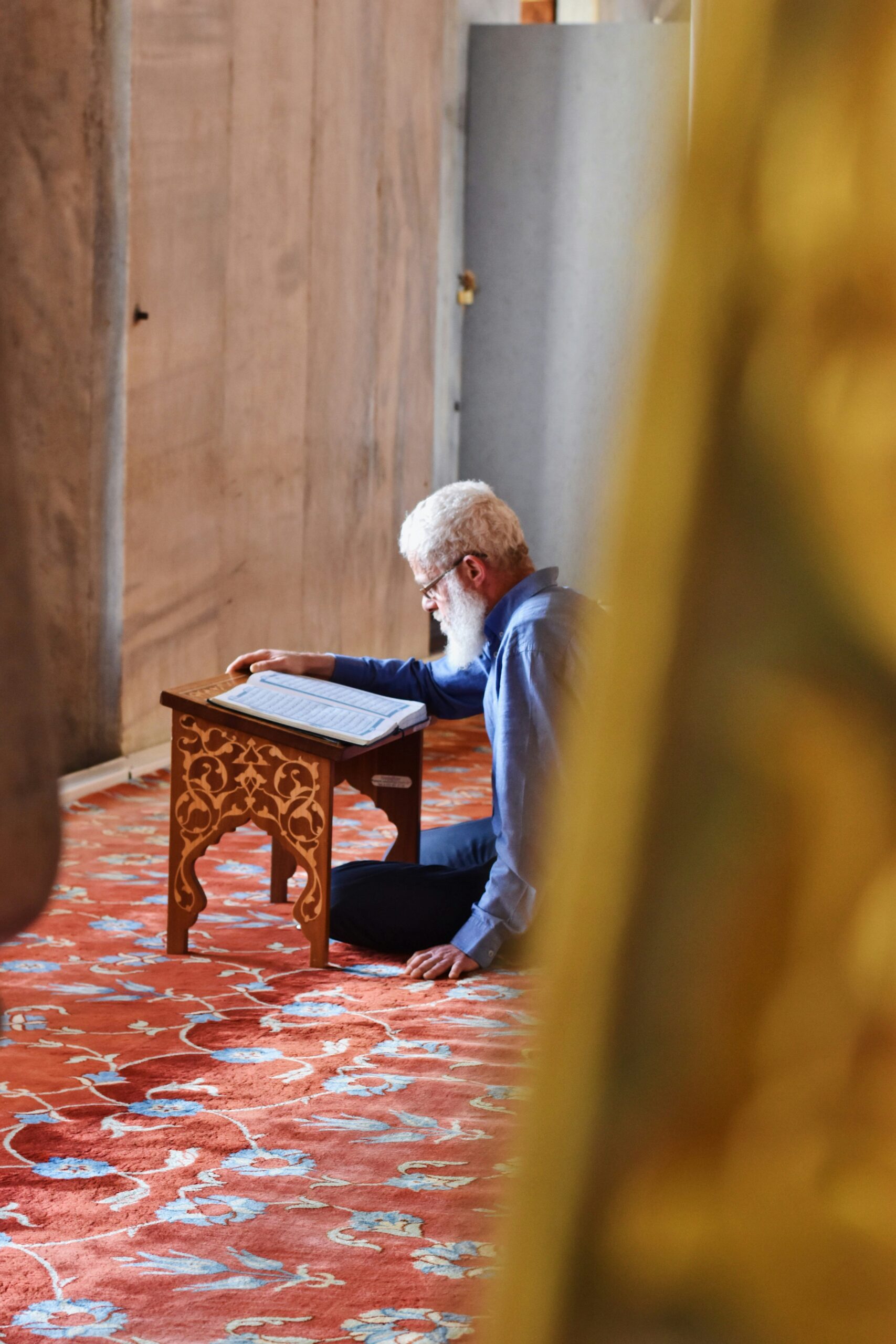
Just like a fetus in the womb has organs such as hands, eyes, and lungs that do not serve any purpose in the current world he exists in but are only valuable for the next stage of his existence, we, as humans on earth, have unnatural and irrational desires for immortality, we cannot endure suffering or pain, we constantly seek imminent and everlasting pleasure, and no climate or weather seems to fit us perfectly.
Those things will only make sense and serve us in the next stage, eternal life, where we meet our creator and are judged by His Mercy and Justice.
And if that beautiful life with all its magnificent nature and pleasures is just a test, can you imagine what the reward would look like?! And if all its suffering, death, and struggle are just a test, what would the punishment look like?!
And that’s our purpose in life: Be prepared for the day we get out of the second womb called earthly life and meet our Creator.
Just like a fetus in the womb has organs such as hands, eyes, and lungs that do not serve any purpose in the current world he exists in but are only valuable for the next stage of his existence, we, as humans on earth, have unnatural and irrational desires for immortality, we cannot endure suffering or pain, we constantly seek imminent and everlasting pleasure, and no climate or weather seems to fit us perfectly.
Those things will only make sense and serve us in the next stage, eternal life, where we meet our creator and are judged by His Mercy and Justice.
And if that beautiful life with all its magnificent nature and pleasures is just a test, can you imagine what the reward would look like?! And if all its suffering, death, and struggle are just a test, what would the punishment look like?!
And that’s our purpose in life: Be prepared for the day we get out of the second womb called earthly life and meet our Creator.
The Messenger of Allah, peace and blessings be upon him, said:
“If the world were as worthy to Allah as the wing of a mosquito, an unbeliever would not even be given a sip of water.”
Our next article will be on achieving that purpose and being happy in our worldly life and the hereafter.