


Ramadan as a Reset: Strong Faith, and New Mindset
We often talk about Ramadan as a time of sacrifice, but we overlook the fact that it’s actually the ultimate proof of what we are capable of.

O believers! Fasting is prescribed for you—as it was for those before you1—so perhaps you will become mindful ˹of Allah˺.
Quran 2:283
Yesterday was the first day of Ramadan, and it has hit me with a realization that is both humbling and deeply uplifting. We often talk about this month as a time of sacrifice, but If welook closer, it’s actually the ultimate proof of what we are capable of. It is the one month where we deliberately push past our “limits” and discover that even when we are running on a low or empty battery, our spirits have a hidden gear we never knew existed.
Ramadan is the crystal-clear evidence that you are capable of so much more than you think. It is a divine reset—a thirty-day window that proves, through the grace of Allah, that Yes, You Can.
Ramadan is the crystal-clear evidence that you are capable of so much more than you think. It is a divine reset—a thirty-day window that proves, through the grace of Allah, that Yes, You Can.
Ramadan: The Month That Shatters Your Excuses
Islam has in its core the habit of challenging your beliefs, so that the true ones get stronger and the fake ones get shattered, and Ramadan is one of those challenges, since it dares your beliefs about what you can and can’t achieve.
You spend the entire year cycling through various habits and default behaviors, accepting them as your true self with the mindset, “This is me, this is how I am, and there’s nothing I can do about it.” to the default and to your “this is me, this is tall I can do, and there’s nothing I can do about it.”
Then, Ramadan happens, and a large mirror is held up before your face, loudly affirming that you are capable of more than you believe. It acts as a divine reset that confirms “Yes You Can” through Allah’s grace.
You spend the entire year cycling through various habits and default behaviors, accepting them as your true self with the mindset, “This is me, this is how I am, and there’s nothing I can do about it.” to the default and to your “this is me, this is tall I can do, and there’s nothing I can do about it.”
Then, Ramadan happens, and a large mirror is held up before your face, loudly affirming that you are capable of more than you believe. It acts as a divine reset that confirms “Yes You Can” through Allah’s grace.
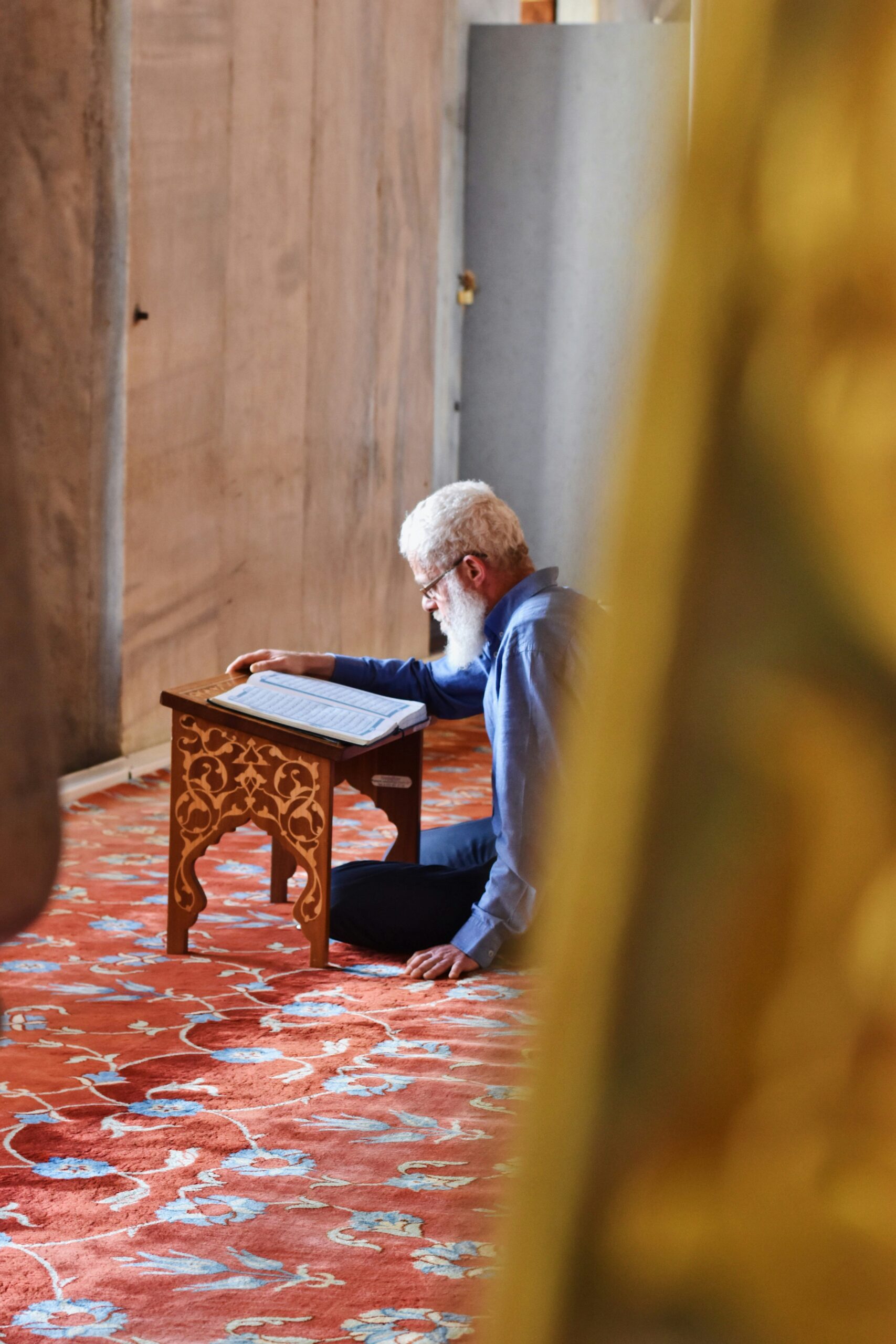
You Are Capable Of Much More
The Prophet (ﷺ) said:
“Verily, fasting is not only from eating and drinking. Rather, fasting is from vanity and obscenity. If someone abuses you or acts foolish against you, then say: Indeed, I am fasting.“
Ṣaḥīḥ Ibn Ḥibbān 3479
The Holy Month shows us that the habits we thought were “impossible” to break are within our control when we add God-obeidience to the equation. Because for your fasting to be accepted, you have no choice but to overcome yourself and your fixed ideas and actions:
Breaking Addictions:
Every Ramadan, Muslims, whether dealing with minor habits or major dependencies, will abstain from all forms of addiction and major sins for at least 30 days through Allah-Consciousness. For example, alcohol abstinence can extend to a strict 70 days—40 days before Ramadan and 30 days during Ramadan. This shows that it is possible to shatter the illusion of helplessness, reclaim your life for 30 days, and sustain this change even beyond.
Mastering the Self:
For those struggling with physical or emotional impulses, Ramadan offers daily victories, proving that the soul is stronger than the body’s desire for food, sex, gossip, or vicious actions, such as cheating, lying, perjury, obscene language, and more, that would make your fasting rejected.
The Prophet (ﷺ) said:
“Whoever does not leave evil words and deeds while fasting, Allah does not need him to leave food and drink“.
Ṣaḥīḥ al-Bukhārī 1903
Undiscovered Energy:
Even those who are convinced they are “sleepy or lazy” discover a hidden reservoir of energy to fulfill their spiritual duties, waking up one hour before dawn to pray and take their Sohor, enduring the entire day at work or school without food or water, and completing the reading of the entire Holy Quran within the 30 days of the Holy Month, proving that our potential is far greater than we imagined.
Devotion:
Those who may have struggled to keep their prayers find the strength not only to keep their daily prayers on time but also to find peace in the extra devotion of Tarawih (ten prayer units after Ishaa and ten before Dawn prayer).
And Yes! You Can Be Sympathetic

The initial sympathy you feel is for yourself as you savor the sweet, fulfilling connection with your Creator that you’ve lacked all year. Ultimately, the fast is a personal act of devotion between the servant and Allah, and we experience it in the peaceful moments before dawn, as we rise for Sohor and head to the mosque in universal silence for Fajr prayer.
A sympathy that grows stronger in Ramadan as you endure hunger and thirst, as so many poor and unfortunate humans do every day of their lives, not by choice, not just for 30 days.
A sympathy that comes from a broken heart, which keeps unfolding the illusions covering it and keeping it slow and chained to fake beliefs about itself and the world around it.
By doing “more with less,” we find ourselves more present for our families, more generous to our neighbors, and more connected to the global Ummah.
A sympathy that grows stronger in Ramadan as you endure hunger and thirst, as so many poor and unfortunate humans do every day of their lives, not by choice, not just for 30 days.
A sympathy that comes from a broken heart, which keeps unfolding the illusions covering it and keeping it slow and chained to fake beliefs about itself and the world around it.
By doing “more with less,” we find ourselves more present for our families, more generous to our neighbors, and more connected to the global Ummah.
The Beauty of Your Redescovering Yourself
The true beauty of Islam is how it refuses to let you stay small. It challenges your self-limiting beliefs and forces you to look past the version of yourself that is tired or discouraged. It demands that you see the real you—the one Allah blessed with incredible strength and purpose.
As you move through these 30 days, remember that every moment of hunger is a step toward your best self, and every prayer is a conversation with your Creator. You aren’t just giving things up or holding yourself back; you are making room for more, for Allah to fill your heart with light.
As you move through these 30 days, remember that every moment of hunger is a step toward your best self, and every prayer is a conversation with your Creator. You aren’t just giving things up or holding yourself back; you are making room for more, for Allah to fill your heart with light.
The Prophet (ﷺ) said:
“May he be humbled, who enters the month of Ramadan and it passes before he is forgiven.”
And you, my friend, what is the biggest lie you’ve told yourself about your limitations this year, and how has Islam helped you defeat it?