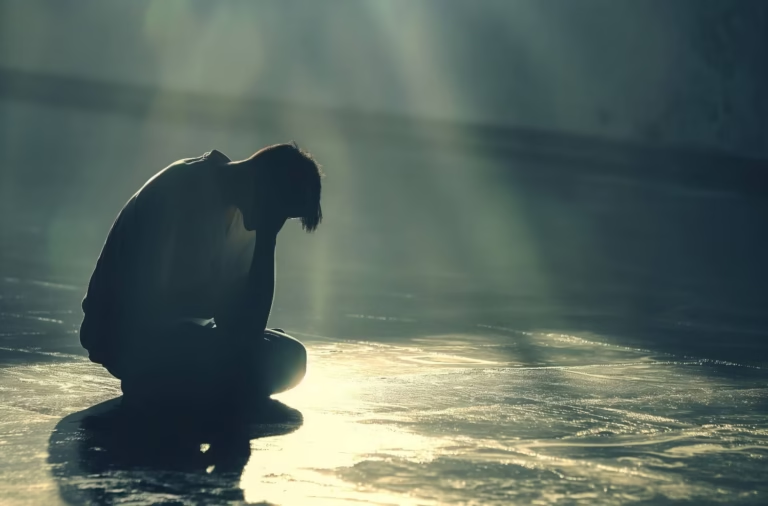


Lessons From Gaza: Two Years of Faith, and Injustice
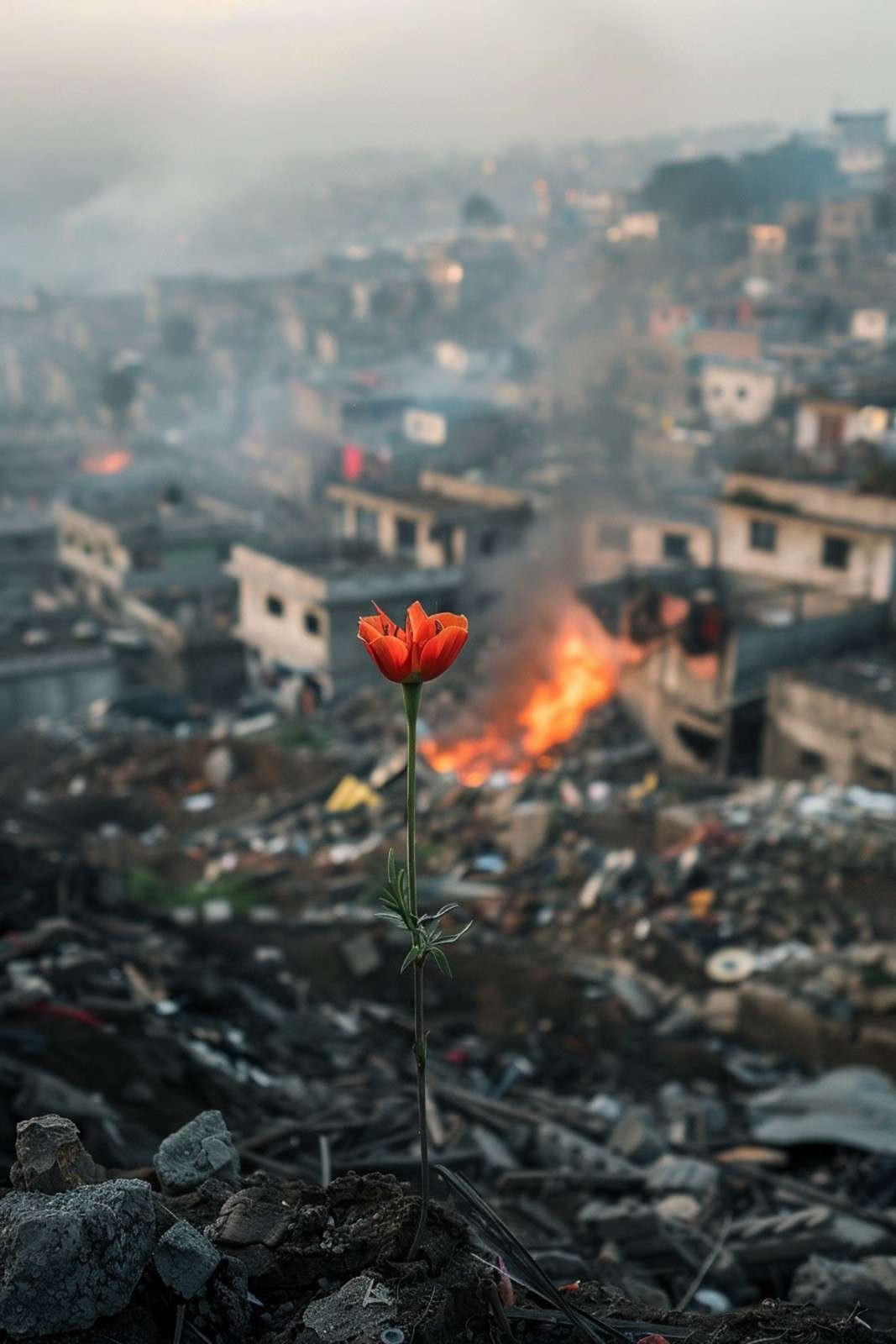
Gaza: Two Years!
Two long, relentless years of watching a tragedy unfold before our eyes — day after day, screen after screen. Gaza has become more than a place in the headlines. It has become a mirror reflecting the world’s silence, resilience, and the actual weight of justice and faith.
As the smoke of war lingers and the dust refuses to settle, I find myself reflecting not only on the cruelty of oppression but also on the profound, transformative lessons that Gaza has etched into my heart.
This is not just a story about politics. It’s about humanity, faith, and the lessons learned when truth collides with injustice.
As the smoke of war lingers and the dust refuses to settle, I find myself reflecting not only on the cruelty of oppression but also on the profound, transformative lessons that Gaza has etched into my heart.
This is not just a story about politics. It’s about humanity, faith, and the lessons learned when truth collides with injustice.
1- Humanity Persists, Even in the Darkest Times
One of the most striking things I’ve learned is what strength looks like. It’s not always loud or flashy. Sometimes, it’s as quiet as a mother comforting her hungry child or a teacher holding classes in a tent under heavy air strikes, during a rainy, cold day. Gaza has shown me that humanity’s best qualities—kindness, generosity, and courage—shine brightest when the stakes are highest. Even when completely isolated from the rest of the world, people in Gaza continue to support one another amid chaos. Families share what little they have—food, shelter, hope. Neighbors become lifelines. Kids still find ways to laugh and play, even when life around them feels like it’s crumbling. It’s a reminder that the human spirit is stubborn. It refuses to be snuffed out, no matter how brutal the circumstances.
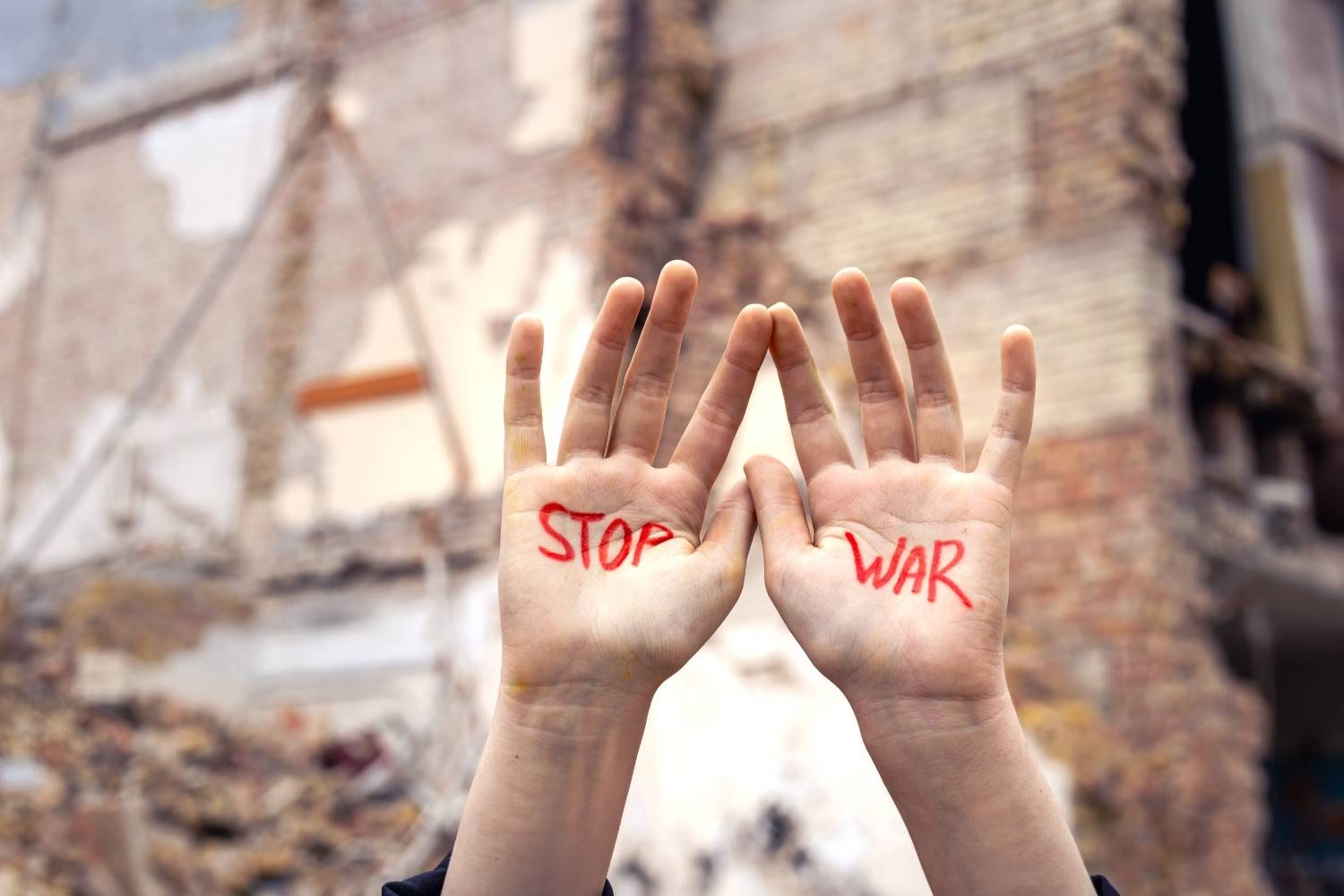
2. Silence Allows Injustice.
The crisis in Gaza has forced me to confront my own silence, my own “minding my own business” axiom. It’s easy to feel powerless when you’re far away, just scrolling through heartbreaking headlines and media. But I’ve learned that staying quiet isn’t neutral or objective. And it can unintentionally prop up injustice.
Speaking up, even in small ways, matters. Whether it’s sharing a story, donating to a relief fund, or having a difficult conversation with a friend, every action counts.
I’ve also realized that speaking up doesn’t mean you need to have all the answers. It’s okay to say, “I don’t fully understand, but this is wrong!” Gaza has taught me to lean into those uncomfortable moments and use my voice, however imperfectly.
Speaking up, even in small ways, matters. Whether it’s sharing a story, donating to a relief fund, or having a difficult conversation with a friend, every action counts.
I’ve also realized that speaking up doesn’t mean you need to have all the answers. It’s okay to say, “I don’t fully understand, but this is wrong!” Gaza has taught me to lean into those uncomfortable moments and use my voice, however imperfectly.
3. Hope Is a Choice
Suppose there’s one thing Gaza has taught me. In that case, it’s that hope isn’t something you wait for—it’s something you choose, it’s not an upcoming event or person, it’s an internal compass that keeps you going in the right direction.
The people of Gaza choose it every day when they rebuild, when they share their stories, when they refuse to let despair win. That choice is humbling. It’s made me reflect on the times I’ve let cynicism take over. If people living through such unimaginable hardship can hold on to hope, then I can, too.
This doesn’t mean ignoring the pain or pretending everything’s okay. It means choosing to believe that change is possible and inevitable, even when it feels far off. It’s about showing up, day after day, and doing what you can.
The people of Gaza choose it every day when they rebuild, when they share their stories, when they refuse to let despair win. That choice is humbling. It’s made me reflect on the times I’ve let cynicism take over. If people living through such unimaginable hardship can hold on to hope, then I can, too.
This doesn’t mean ignoring the pain or pretending everything’s okay. It means choosing to believe that change is possible and inevitable, even when it feels far off. It’s about showing up, day after day, and doing what you can.
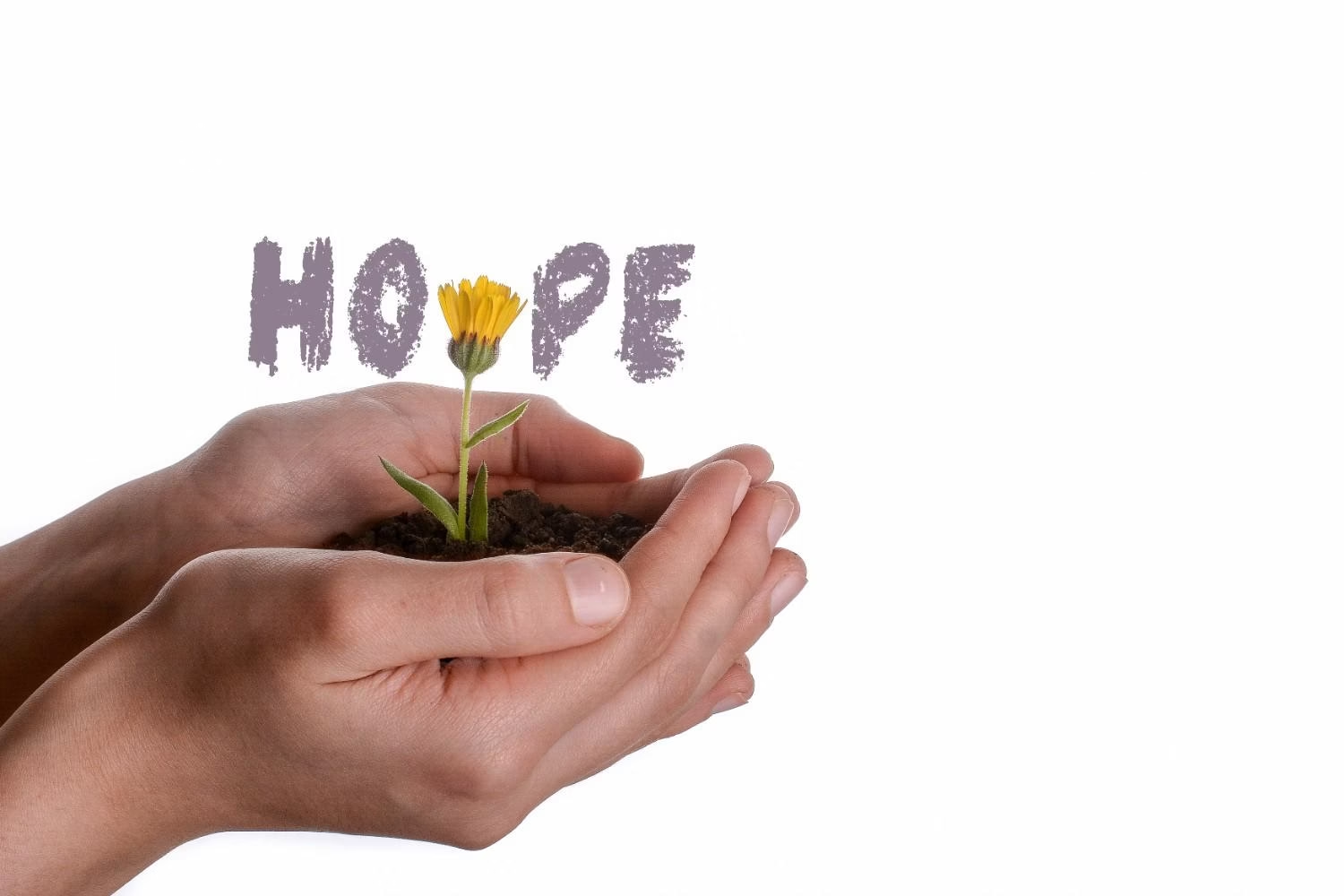
4. Faith is Bulletproof
However, the hope of the people of Gaza originated from a limitless source: faith in God.
They’ve taught me that faith isn’t measured by comfort, but by how firmly we hold onto God when everything else is stripped away.
When everything around you crumbles, what remains? The answer Gaza gave me was startling: faith in a Just, Merciful, and Powerful God. This isn’t just an abstract concept—it is the fuel that keeps people going when logic and data say there’s no reason to continue.
In the face of unimaginable adversity, ordinary people do extraordinary things—not because they’re heroes, but because they believe.
Faith isn’t about believing in a guaranteed happy ending; it’s about going against all odds and choosing the right just side, knowing firmly that it’s the ultimate winning and surviving side, a law decreed by the divine.
They’ve taught me that faith isn’t measured by comfort, but by how firmly we hold onto God when everything else is stripped away.
When everything around you crumbles, what remains? The answer Gaza gave me was startling: faith in a Just, Merciful, and Powerful God. This isn’t just an abstract concept—it is the fuel that keeps people going when logic and data say there’s no reason to continue.
In the face of unimaginable adversity, ordinary people do extraordinary things—not because they’re heroes, but because they believe.
Faith isn’t about believing in a guaranteed happy ending; it’s about going against all odds and choosing the right just side, knowing firmly that it’s the ultimate winning and surviving side, a law decreed by the divine.
5. The Power and Failure of Media
Modern media can serve as both a new cruel dictator and the pinnacle of democracy simultaneously.
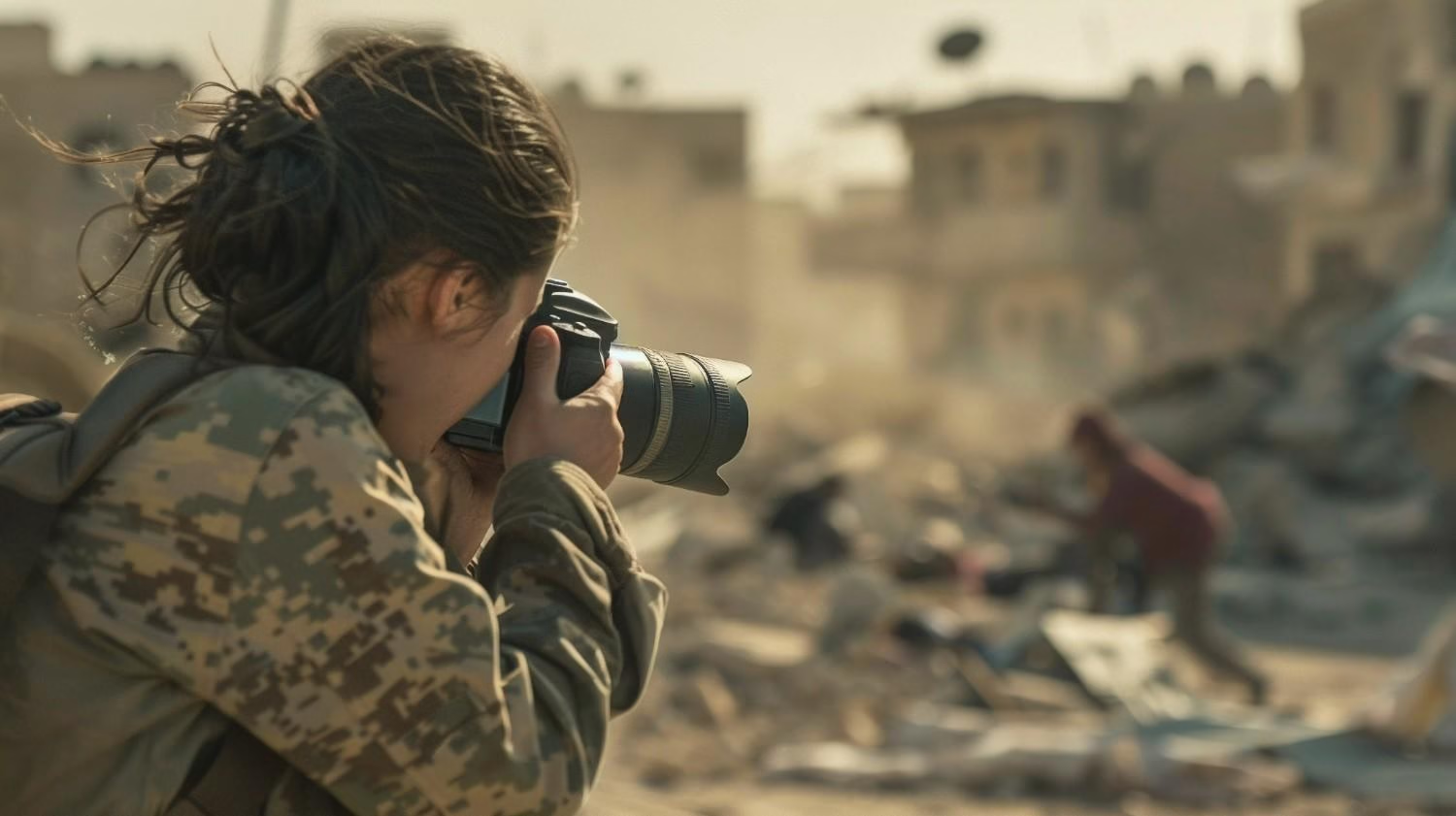
Gaza exposed the dual nature of modern media. On one hand, social media gave a voice to the voiceless, allowing real-time documentation of events that might otherwise have been hidden. On the other hand, I witnessed how selective coverage, framing, and narrative control can shape—or distort—our understanding of human suffering.
I learned to question everything: Who’s telling the story? Whose voices are amplified? Whose are buried? The crisis taught me that being informed doesn’t mean consuming more news—it means consuming it more critically and seeking diverse perspectives, especially from those directly affected.
Gaza exposed the dual nature of modern media. On one hand, social media gave a voice to the voiceless, allowing real-time documentation of events that might otherwise have been hidden. On the other hand, I witnessed how selective coverage, framing, and narrative control can shape—or distort—our understanding of human suffering.
I learned to question everything: Who’s telling the story? Whose voices are amplified? Whose are buried? The crisis taught me that being informed doesn’t mean consuming more news—it means consuming it more critically and seeking diverse perspectives, especially from those directly affected.
6. The Fragility of International Law
I have learned that the world we live in was never about values, but about power. Forget the flashy slogans; Gaza has become a mirror reflecting the ugly face of our global systems of injustice and unaccountability. I learned that international law, humanitarian conventions, and human rights declarations are only as strong as the collective will to enforce them. When power goes unchecked, even the most carefully crafted laws become mere silly jokes.
This realization was devastating but necessary. It pushed me to ask: What does justice mean in a world where it’s applied unequally? How do we design systems that protect the vulnerable, regardless of their ethnicity or geopolitical affiliations?
This realization was devastating but necessary. It pushed me to ask: What does justice mean in a world where it’s applied unequally? How do we design systems that protect the vulnerable, regardless of their ethnicity or geopolitical affiliations?
7. History Repeats When We Forget: A Call to Keep Learning
The opposite of war isn’t peace—it’s justice. And justice requires acknowledging uncomfortable truths.
Understanding history isn’t about assigning blame to ancestors; it’s about recognizing patterns so we can break them. Gaza showed me that without acknowledging past injustices, we’re doomed to perpetuate them under different names.
Gaza taught me about the cyclical nature of conflict and the dangers of historical amnesia. Patterns of displacement, dehumanization, and violence that should have been relegated to history books were playing out in real time. I learned that “never again” is not a guarantee—it’s a responsibility that each generation must actively uphold.
Understanding history isn’t about assigning blame to ancestors; it’s about recognizing patterns so we can break them. Gaza showed me that without acknowledging past injustices, we’re doomed to perpetuate them under different names.
Gaza taught me about the cyclical nature of conflict and the dangers of historical amnesia. Patterns of displacement, dehumanization, and violence that should have been relegated to history books were playing out in real time. I learned that “never again” is not a guarantee—it’s a responsibility that each generation must actively uphold.
Final Taught
So, let’s keep the conversation going. Let’s continue listening to the voices of the oppressed around the world, support the work being done, and push for a world where justice isn’t just a mirage in a vast desert called humanity.
If you’ve got thoughts, stories, or ways you’ve been inspired to act, I’d love to hear them. Please drop a comment below, and let’s learn from each other.
If you’ve got thoughts, stories, or ways you’ve been inspired to act, I’d love to hear them. Please drop a comment below, and let’s learn from each other.

,